
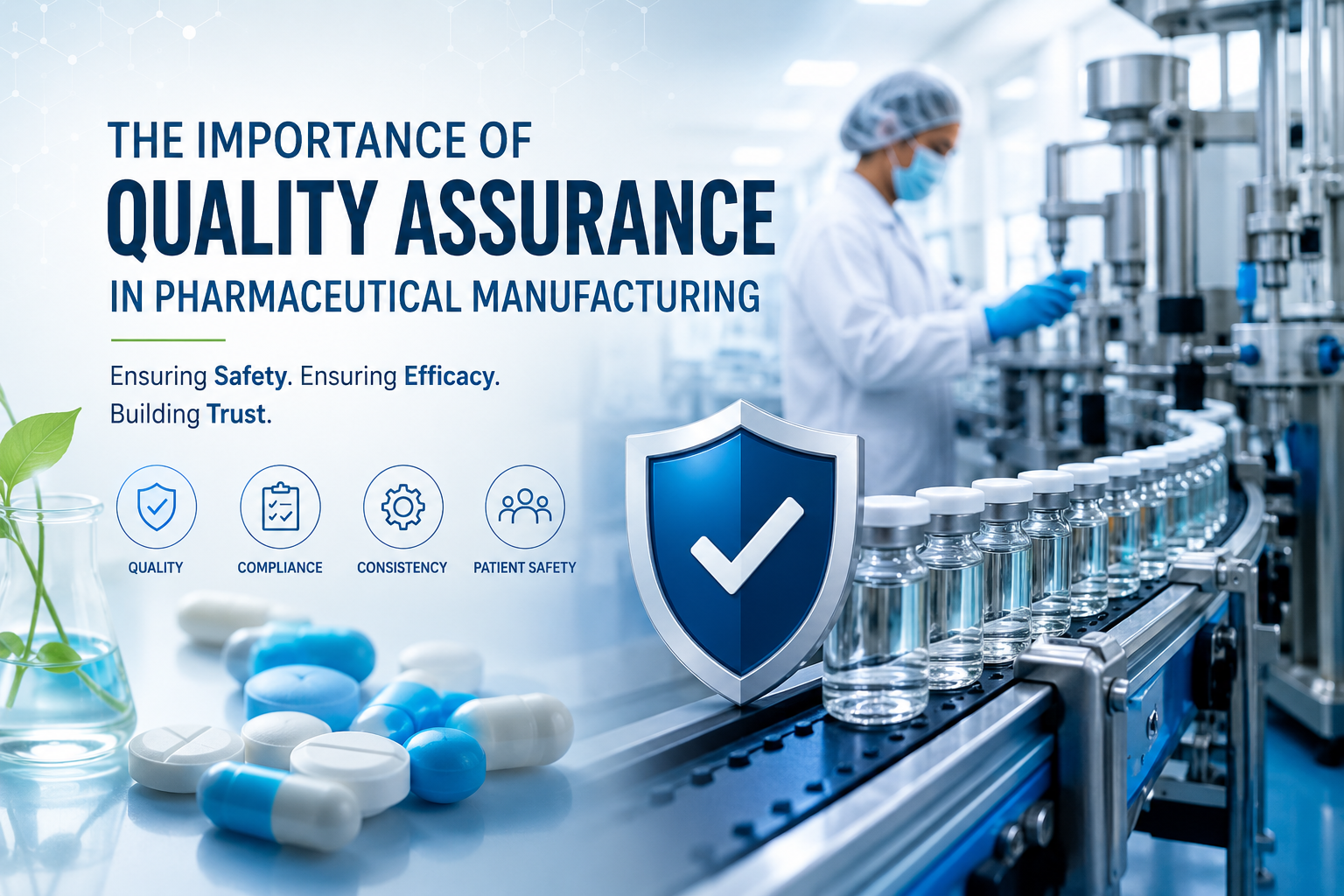
The pharmaceutical industry plays a vital role in safeguarding public health by developing and manufacturing medicines that improve and save lives. However, the effectiveness of any medication depends not only on its formulation but also on the quality standards maintained throughout the manufacturing process.
What is Quality Assurance in Pharmaceuticals?
Quality Assurance (QA) refers to the systematic processes and procedures implemented to ensure that pharmaceutical products consistently meet predefined quality standards. It covers every stage of production, from sourcing raw materials to packaging and distribution.
The primary objective of QA is to guarantee that every batch of medicine is safe, effective, and compliant with regulatory requirements.
Why Quality Assurance Matters
1. Patient Safety
Patient safety is the top priority in pharmaceutical manufacturing. Even minor deviations in production can affect the efficacy of a medication or cause adverse health effects. Robust quality assurance processes help identify and eliminate potential risks before products reach consumers.
2. Regulatory Compliance
Pharmaceutical companies must comply with stringent regulations established by health authorities worldwide. Quality assurance ensures adherence to Good Manufacturing Practices (GMP), documentation requirements, and industry standards, reducing the risk of regulatory violations.
3. Product Consistency
Patients and healthcare providers rely on medicines to perform consistently. Quality assurance programs ensure that each batch of a pharmaceutical product maintains the same strength, purity, and performance characteristics.
4. Brand Reputation
Trust is one of the most valuable assets for any pharmaceutical company. Maintaining high-quality standards helps build confidence among healthcare professionals, distributors, and patients while protecting the company’s reputation in the marketplace.
Key Components of Pharmaceutical Quality Assurance
- Raw material testing and supplier qualification
- Process validation and monitoring
- Equipment calibration and maintenance
- In-process quality checks
- Finished product testing
- Documentation and record management
- Employee training and competency development
Emerging Trends in Quality Management
The pharmaceutical industry is increasingly adopting digital technologies to enhance quality assurance. Advanced analytics, automation, artificial intelligence, and real-time monitoring systems are helping manufacturers improve accuracy, efficiency, and compliance.
These innovations not only reduce operational risks but also support faster decision-making and continuous improvement across manufacturing operations.
Conclusion
Quality assurance is the foundation of pharmaceutical excellence. By implementing rigorous quality systems and embracing technological advancements, pharmaceutical manufacturers can ensure the delivery of safe, effective, and reliable medicines to patients worldwide.
As healthcare needs continue to evolve, maintaining the highest quality standards will remain essential for protecting public health and fostering trust in pharmaceutical products.